Saturday, August 8, 2020

With survival at stake, can weapons makers change course?


by Kathy Kelly
Pax Christi USA Teacher of Peace

Today, the seventy-fifth anniversary of the atomic attack on Hiroshima, should be a day for quiet introspection. I recall a summer morning following the U.S. 2003 “Shock and Awe” invasion of Iraq when the segment of the Chicago River flowing past the headquarters of the world’s second largest defense contractor, Boeing, turned the rich, red color of blood. At the water’s edge, Chicago activists, long accustomed to the river being dyed green on St. Patrick’s Day turned the river red to symbolize the bloodshed caused by Boeing products. On the bridge outside of Boeing’s entrance, activists held placards urging Boeing to stop making weapons.

This summer, orders for Boeing’s commercial jets have cratered during the pandemic, but the company’s revenue from weapon-making contracts remains steady. David Calhoun, Boeing’s CEO, recently expressed confidence the U.S. government will support defense industries no matter who occupies the Oval Office. Both presidential candidates appear “globally oriented,” he said, “and interested in the defense of our country.”

Investors should ask how Boeing’s contract to deliver 1,000 SLAM- ER weapons (Standoff Land Attack Missiles-Expanded Response) to the Kingdom of Saudi Arabia “defends” the United States.

Here are excerpts from Jeffrey Stern’s account of a missile’s impact on the town of Arhab in a remote area of Yemen. In this case, the missile was manufactured by Raytheon:

Now, as Fahd walked into the hut, a weapon about the length of a compact car was wobbling gracelessly down through the air toward him, losing altitude and unspooling an arming wire that connected it to the jet until, once it had extended a few feet, the wire ran out and ripped from the bomb.

Then it was as if the weapon woke up. A thermal battery was activated. Three fins on the rear extended all the way and locked in place. The bomb stabilized in the air. A guidance-control unit on the nose locked onto a laser reflection — invisible to the naked eye but meaningful to the bomb — sparkling on the rocks Fahd walked over.

At the well, at the moment of impact, a series of events happened almost instantaneously. The nose of the weapon hit rock, tripping a fuse in its tail section that detonated the equivalent of 200 pounds of TNT. When a bomb like this explodes, the shell fractures into several thousand pieces, becoming a jigsaw puzzle of steel shards flying through the air at up to eight times the speed of sound. Steel moving that fast doesn’t just kill people; it rearranges them. It removes appendages from torsos; it disassembles bodies and redistributes their parts.

Fahd had just stepped into the stone shelter and registered only a sudden brightness. He heard nothing. He was picked up, pierced with shrapnel, spun around and then slammed into the back wall, both of his arms shattering — the explosion so forceful that it excised seconds from his memory. Metal had bit into leg, trunk, jaw, eye; one piece entered his back and exited his chest, leaving a hole that air and liquid began to fill, collapsing his lungs. By the time he woke up, crumpled against stone, he was suffocating. Somehow he had survived, but he was killing himself with every breath, and he was bleeding badly. But he wasn’t even aware of any of these things, because his brain had been taken over by pain that seemed to come from another world.

In 2019, the UN Group of Eminent Experts on Yemen observed “the continued supply of weapons to parties involved in Yemen perpetuates the conflict and the suffering of the population.”

These experts say “the conduct of hostilities by the parties to the conflict, including by airstrikes and shelling, may amount to serious violations of international humanitarian law.”

A year and a half ago, were it not for a presidential veto, both houses of the U.S. Congress would have enacted a law banning weapons sales to Saudi Arabia.

Another end-user of Boeing’s weapons is the Israeli Defense Force.

The company has provided Israel with AH-64 Apache helicopters, F-15 fighter jets, Hellfire missiles (produced with Lockheed Martin), MK-84 2000-lb bombs, MK-82 500-lb bombs, and Joint Direct Attack Munitions (JDAM) kits that turn bombs into “smart” GPS-equipped guided bombs. Boeing’s Harpoon sea-to-sea missile system is installed on the upgraded 4.5 Sa’ar missile ships of the Israeli Navy.

Apache helicopters, Hellfire and Harpoon missiles, JDAM guiding systems, and Dense Inert Metal Explosive (DIME) munitions have been used repeatedly in Israeli attacks on densely populated civilian areas, resulting in thousands of civilian casualties in Lebanon, the West Bank, and Gaza. The human rights community, including Human Rights Watch, Amnesty International, B’Tselem, and United Nations commissions, ruled these attacks to be human rights violations and at times war crimes.

I lived with a family, in Gaza, during the final days of the 2009 “Operation Cast Lead” bombing. Abu Yusuf, Umm Yusuf, and their two small children, Yusuf and Shahid, welcomed Audrey Stewart and me to stay with them. Once every 11 minutes from 11 p.m. – 1:00 a.m. and again from 3:00 a.m. – 6:00 a.m., we heard an ear-splitting blast. Normally, I wouldn’t have known the difference between the sound of a Hellfire Missile exploding and that of a 500 lb. bomb dropped from an F-15, but soon I could tell the difference. Little Yusuf and Shahid taught us to distinguish one gut-wrenching sound from the other. They had been cringing under the bombs for 18 days and nights.

I don’t see how the sale of weapons to governments which use them against civilian populations, against people like Fahad, in Arhab or Abu Yusuf and his family in Gaza, defends people in the U.S.

Boeing’s vast resources for scientific know-how, skillful engineering, and creative innovation could, however, help defend the U.S. against the greatest threat we  now face, environmental climate catastrophe. Writing for The New York Review of Books, Bill McKibben predicts “a century of crises, many of them more dangerous than what we’re living through right now.” The main question, he says, is whether human beings can hold the alarming rise in temperature “to a point where we can at great expense and suffering, deal with those crises coherently, or whether they will overwhelm the coping abilities of our civilization.”

“A rise of one degree doesn’t sound like an extraordinary change,” McKibben writes, “but it is: each second, the carbon and methane we’ve emitted trap heat equivalent to the explosion of three Hiroshima-sized bombs.”

Boeing’s engineers, scientists, designers and marketers could help turn  the tide of human actions destroying our earth. Their expertise could truly “defend” people.

There’s a lesson to be learned from the river flowing outside of Boeing’s headquarters. It actually flows backwards. Long ago, brilliant engineers designed a way for the river to reverse its course. In doing so, they saved Chicago from sewage contamination of its drinking water supply – Lake Michigan. This action was hailed as one of the great engineering wonders of the world.

The City’s sewers discharged human and industrial wastes directly to its rivers, which in turn flowed into the lake. A particularly heavy rainstorm in 1885 caused sewage to be flushed into the lake beyond the clean water intakes. The resulting typhoid, cholera, and dysentery epidemics killed an estimated 12 percent of Chicago’s 750,000 residents, and raised a public outcry to find a permanent solution to the city’s water supply and sewage disposal crisis.”

The Sanitary and Ship Canal was constructed at an estimated cost of over $70,000,000. After its completion, in 1900, waterborne disease rates quickly and dramatically improved, and its water supply system was soon regarded as being one of the safest in the world. With its water source made safe and dependable by the canals, Chicago and the region grew and prospered rapidly.

I don’t think it’s a good idea to dye the Chicago River, red or green. We need to protect the river and all wildlife dependent on it. But, we must continually confront Boeing and other weapon manufacturers, and insist they not destroy lives, homes and infrastructures in other lands. We must urge Boeing, like the river, to reverse course and participate, with dignity and humility, in the pursuit of human survival.

____________

POSTER CREDIT: ANOTHER MOTHER FOR PEACE, LORRAINE SCHNEIDER, 1966

Joint interfaith statement on the 75th anniversary of the atomic bombings of Hiroshima and Nagasaki

 AUGUST 6, 2020

NOTE: Pax Christi USA has joined nearly 200 other organizations in signing onto this statement to commemorate the 75th anniversaries of the bombings of Hiroshima and Nagasaki.

As a wide coalition of faith-based communities from around the world, we have committed to speaking with one voice that rejects the existential threat to humanity that nuclear weapons pose. We reaffirm that the presence of even one nuclear weapon violates the core principles of our different faith traditions and threatens the unimaginable destruction of everything we hold dear. Nuclear weapons are not only a future risk, their presence here and now undermines the ethical and moral foundations of the common good. We call for your commitment to a world that is more peaceful, safe, and just—a world only possible with the elimination of nuclear weapons.

August 2020 marks the 75th anniversary of the nuclear attacks on Hiroshima and Nagasaki—attacks which devastated these cities causing up to 213,000 deaths by the end of 1945 and many more in the following years. The attacks inflicted excruciating pain and suffering on both humans and the environment.

We are grateful for the global hibakusha, survivors, who have courageously borne witness, often in the face of intimidation and the recurring tragedy of loss and illness. We must meet the courage of the survivors with our own. We must abolish nuclear weapons forever.

We lament the racism and colonialism that drove the nuclear-weapon States to test their weapons on the communities that they deemed expendable, lives far away from their own, lives that mattered less, lives that were taken in pursuit of destructive power for a few. We acknowledge the immense suffering, oppression and exploitation faced by the Indigenous communities around the world whose bodies, lands, waters and air have served as the testing grounds for the ambitions of those who dominate with force.

Few who believe in the disingenuous notion of nuclear deterrence have witnessed or experienced the devastation of these weapons in their own communities. After seventy-five years we can see that nuclear weapons have not brought an end to war. Nuclear weapons do not create peace, rather they intensify the scourge and threat of war in our world, lives and communities. Because they are designed to cause massive and indiscriminate destruction, because they siphon precious resources that are needed to meet human needs and protect our shared planet, and because they enforce and sustain a global system based on domination and unending violence, the existence of nuclear weapons fundamentally contradicts the principles of any moral, religious and ethical system that values life.

Whilst many of our lives and imaginations might be far removed from memories of “hell on earth” and the legacies of environmental impacts, shattering health conditions and trauma wrought in a nuclear explosion, the impacts of the current global health crisis have given us all a glimpse into how life would change in the event of a nuclear explosion. Like the COVID-19 pandemic, the health, environmental and economic consequences would not be contained in space or time. Nuclear tests and accidents have revealed that radiation spreads through the atmosphere, oceans, plants, animals, and whole human populations. Our economies, production chains and ability to grow food would be severely disrupted.

Many have consigned the stories of the horrors of this time to our distant past—stories only to be revisited when certain leaders deem it necessary to remind their citizens what others might do to them if they give up their own nuclear capacities. But we will not forget or ignore the powerful witness of those affected by developing, testing and using nuclear weapons. We are committed to ending nuclear weapons forever to honor the global hibakusha and to save our children, grandchildren, and future generations from experiencing what they suffered. As we build a world where equality, peace and justice are abundant for all, there is no place for nuclear weapons in our shared future.

Despite commitments made—including under the Treaty on the Non-Proliferation of Nuclear Weapons (NPT)—nuclear-weapon States have continued to maintain and develop their nuclear arsenals, while other States have worked to acquire them.

Despite our clear-eyed awareness of the dangers of the present moment, we are united in our irrepressible belief that change for the good is possible—in individual lives and in our world. We know that in the most dangerous and threatening times, human beings are capable of cooperation, creative problem-solving and mutual trust. Indeed, the existence of the nuclear Non-Proliferation Treaty (NPT) itself reaffirms that hopefulness. The NPT was born out of a moment when fears about nuclear war and distrust were at a peak, and it acted as a beacon to remind nations that international collaboration was possible and that each nation’s security does not demand the insecurity of others, but rather is contingent upon the security of all. We find ourselves again in such a moment in which the reaffirmation of international norms and the embrace of the NPT’s ultimate promise—abolition—must be realized.

In 2017, this goal of abolition moved closer to becoming reality when the UN adopted the Treaty on the Prohibition of Nuclear Weapons, calling for the complete elimination of all nuclear weapons. Once 50 States have ratified it, it will enter into force. We urge our governments to use the opportunity of the 75th anniversary of the only occasion that nuclear weapons have been used in conflict, to ensure that they are never used again in any circumstances. We call upon all States to join the growing community of States which have rejected nuclear weapons entirely. We appeal to you to ratify the Treaty on the Prohibition of Nuclear Weapons.  

Click here to see a list of signatories.

Saturday, August 1, 2020

Annual UN vote on the blockade postponed to May 2021


News from Cuba | Thursday, 30 July 2020

Cuba has announced that it will postpone the annual resolution it presents to the United Nations General Assembly condemning the US blockade of the island until May 2021.

Anayansi Rodriguez, the island's Deputy Minister of Foreign Affairs told a press conference on 29 July that the decision to postpone the resolution and vote had been taken "solely due to the ... COVID-19 pandemic and its direct impact on the work at UN headquarters" in New York.

According to Rodriguez, "the complex epidemiological situation derived from the COVID-19 pandemic at a global level and particularly in the United States, including New York City, will lead to changes in the normal development of the work of the United Nations General Assembly in its 75th session," which for the first time will be held "virtually" starting in September.


"That will have repercussions on the debate and vote on the resolution," she said, leading the government to opt to postpone the measure.

For the last 28 years the UN has voted overwhelmingly to condemn the US policy In 2019 the vote was 187-3, with only the US, Israel and Brazil voting against.

Read the full press statement by Anayansi Rodríguez below: The complex epidemiological situation caused by the COVID-19 pandemic at the global level and particularly in the United States, including New York City, will entail changes to the ordinary course of the work of the United Nations General Assembly in its 75th session, which is due to begin in September. This will have an impact on the debate and the voting on the resolution our country submits to the UNGA plenary meeting, which year after year has been supported by the international community that almost unanimously calls for the lifting of the US economic, commercial and financial blockade against Cuba. This resolution is traditionally presented and adopted by the UN General Assembly in autumn. However, the situation of the pandemic in the United States and particularly New York City cannot be predicted by that time. Instead, predictions indicate that there will be an upsurge in the disease, therefore sanitary and epidemiological measures will continue to be applied at the UN headquarters, which, inter alia, limit to the minimum the presence of delegations in its facilities. Taking into account these issues and in order to guarantee the proper development of the debate and the voting, whose positive results are closely followed by the Cuban people and the international community, it has been decided transfer the consideration of the draft resolution “Necessity of ending the economic, commercial and financial embargo imposed by the United States of America against Cuba” from the traditional date of late October and early November to the month of May 2021, during the resumed 75th session of the UNGA. We hope that by this date there will be an improvement of the epidemiological situation in New York City, the Organization´s headquarters. This decision responds only to the epidemiological consequences caused by the COVID-19 pandemic and its direct and practical impact on the work at the UN Headquarters. We reaffirm that as long as the US economic, commercial and financial blockade against Cuba persists, which far from being lifted as demanded by the international community, has been tightened even in these times of pandemic, Cuba will not stop denouncing this policy in all possible platform. On the twenty-ninth consecutive time, Cuba will submit to the United Nations General Assembly its draft resolution against the blockade, for which we trust in the sustained and overwhelming support of the international community. Havana, 29 July 2020

Saturday, July 25, 2020

Georgia’s Stone Mountain is marred by a massive carving that sanitizes the dangerous and hateful legacy of the Confederacy


Stone Mountain is the world’s largest monument to white supremacy. The enormous landform – the centerpiece of a state park that draws more than 4 million visitors a year, some 15 miles northeast of Atlanta – is marred by a massive carving commemorating the hateful legacy of the Confederacy.

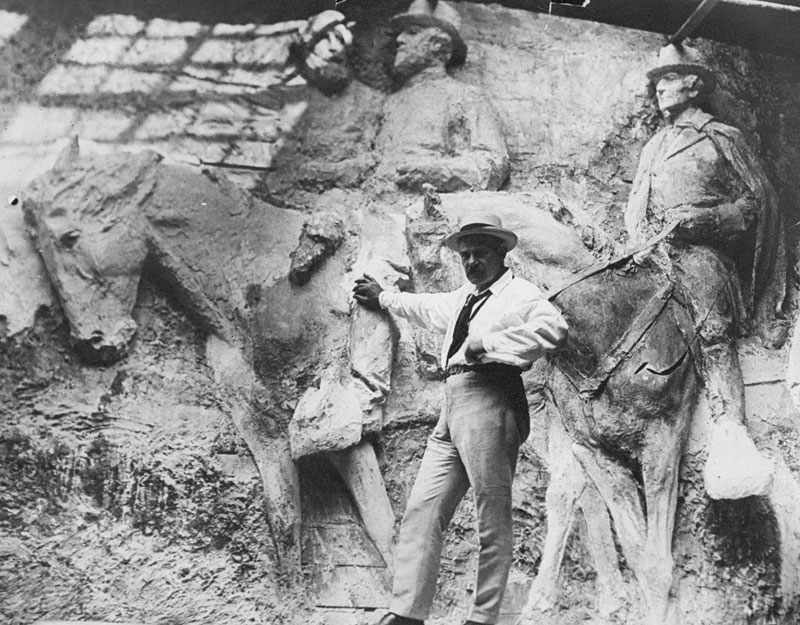
The carved surface depicts Confederate leaders Jefferson Davis, Robert E. Lee and Thomas “Stonewall” Jackson in a reverent light across three acres. The men sit on horseback, hats over their hearts, in a tableau that cannot be interpreted as anything other than a celebration of the Confederacy and the values – white supremacy and the enslavement of Black people – for which it stood.

Moreover, the history of the mountain and the Confederate memorial is intimately tied to hate groups like the Ku Klux Klan and the racist response to desegregation efforts in the 20th century. Work did not begin on the carving until 1923, long after the Civil War ended, and required three attempts and almost 50 years to complete. The final effort was launched in 1964 as a backlash to Brown v. Board of Education and the civil rights movement. The park’s official grand opening was pointedly celebrated on April 14, 1965 – 100 years to the day that President Abraham Lincoln was shot at Ford’s Theatre – but the carving was not completed until 1972.

There’s no question that Stone Mountain is a relic of an ugly past – a past that very much continues to haunt us to this day, as this year’s mass protests over the murders of Black people by police and vigilantes have made painfully clear. Across the country, statues and other pieces of Confederate iconography are gradually being removed from public display, a long overdue – and still incomplete – step forward after years of inaction.

Now, a growing number of people are calling for the Stone Mountain carving to be removed. Over the July 4 weekend, a large group of mostly Black protesters made headlines when they marched on the memorial bearing arms in a peaceful demonstration to demand just that.

At the Southern Poverty Law Center, we’ve long argued that Confederate symbols have no place in public spaces. Stone Mountain is no exception.

The Klan’s sacred stone

Stone Mountain’s history – both the site itself and the memorial that blights it – has for more than a century been entwined with the Ku Klux Klan.

On Thanksgiving night 1915, William J. Simmons led a group of 15 Klansmen to the summit of Stone Mountain, where they set up a flag-draped altar, opened a Bible and burned a 16-foot cross in a Klan initiation ceremony. The hate group had previously swept the South during Reconstruction but fizzled in the 1870s. Simmons’ Stone Mountain ceremony marked its second coming. The resurrected KKK would soar in popularity over the next few decades, primarily targeting Black people, but also people who are Jewish, Catholic or from other countries, among others.

Additionally, Klan money helped fund the Stone Mountain monument, and the first of its three head sculptors was a Klansman, as was the owner of the mountain, Samuel Venable. Venable, whose family bought the site in 1887 to run a quarry, granted the Klan rights to hold meetings there in perpetuity – and for decades it did.


Sculptor Gutzon Borglum

Helen Plane, a Civil War widow and charter member of the United Daughters of the Confederacy, spearheaded the first attempt to carve the Stone Mountain memorial. She, too, was a Klan sympathizer. After Gutzon Borglum was chosen as the monument’s sculptor in 1915, Plane wrote him with a design suggestion. “Why not represent a small group of them in their nightly uniform approaching in the distance?” she asked.

Due to funding challenges and World War I, the jackhammers, drills and explosives didn’t descend upon the mountain until 1923. Borglum had grandiose visions of carving an army of Confederates in addition to the three leaders, as many as 1,000 figures. But after a year’s work, all he’d completed was Lee’s head.

Project managers fired Borglum and later pressed charges when he destroyed his models. He fled the state and went on to carve Mount Rushmore in the Black Hills of South Dakota on sacred Lakota land.

One more attempt was made to complete the carving after Borglum’s departure, but by 1928, the project had stalled, and would sit mothballed for the next 36 years.

Then came the Supreme Court’s Brown v. Board of Education school desegregation decision and the rise of the civil rights movement. The racist backlash to the changing legal and cultural standards of the era was swift and widespread, especially in the Deep South. In 1958, under Georgia’s segregationist governor, Marvin Griffin, the state created the Stone Mountain Memorial Association and purchased the dome and surrounding land to create a memorial park. Carving resumed in July 1964 and finished eight years later.

While Georgia’s purchase of Stone Mountain voided the agreement that allowed the Klan to hold meetings there, that hasn’t stopped sympathizers and other white supremacists from making pilgrimages to their state-sponsored monument to hate. Notable rallies were organized at the site in 2015 and 2016.

An unclear future

Even as support for the removal of the Stone Mountain monument grows, a large hurdle remains: The monument is currently protected by Georgia law. As part of a 2001 compromise that retired a segregation-era state flag that prominently featured the Confederate battle flag, lawmakers adopted a statute that singles out the Stone Mountain carving for preservation:

“Any other provision of law notwithstanding, the memorial to the heroes of the Confederate States of America graven upon the face of Stone Mountain shall never be altered, removed, concealed, or obscured in any fashion and shall be preserved and protected for all time as a tribute to the bravery and heroism of the citizens of this state who suffered and died in their cause.”

The Georgia Legislature’s embrace of Stone Mountain only deepens the hurtful impact of the monument. Speaking to the SPLC in 2018, Richard Rose, president of the Atlanta NAACP, summarized the situation:

“If Joe Blow wants to put a statue of Robert E. Lee in his front yard or on his farm, I think that’s great. I mean, this is America; he ought to be able to do that. But the state of Georgia should not be doing that, the state of Alabama, the state of Virginia. Cities and counties should not be promoting white supremacy and racism.”

In recent years, legislation has been introduced that would strip Stone Mountain of its special protection, but none of those attempts have yet succeeded. That may change, as public opinion continues to shift on the removal of Confederate monuments.

In the meantime, creative solutions have been proposed to circumvent the state law. The law does not mandate maintenance of the Stone Mountain carving, for example, and if all cleaning work on the monument were to stop, natural vegetation would soon grow over and eventually obscure the relief.

Writing for The Guardian, Atlanta-based urban designer Ryan Gravel endorsed the “let nature take its course” approach: “We should allow growth to also overtake the sculpture’s many clefts and crinkles as they naturally collect organic material and allow moss and lichen to obscure its details. We should blast it with soil to encourage such growth and consider this new camouflage as a deliberate creative act, transforming the sculpture into a memorial to the end of the war – not to the traitors who led it.”

Photo by Jessica McGowan / Getty Images

Thursday, July 9, 2020

Special SPLC Hatewatch investigation has uncovered far-right TV host Jack Posobiec’s ties to white supremacy, neo-fascists, antisemites — and the White House


Dear Readers:

A special SPLC Hatewatch investigation has uncovered far-right TV host Jack Posobiec’s ties to white supremacy, neo-fascists, antisemites — and the White House.

Posobiec, a host for One America News Network (OANN), rose to conservative fame using a “Game of Thrones” fan account to tweet antisemitic attacks and spread propaganda. Then, he started linking up with white supremacists like Richard Spencer.

Beginning in 2016, Posobiec ramped up his efforts to boost hate content on Twitter, sharing propaganda promoting white supremacist activism, collaborating with white supremacists and participating in disinformation campaigns. Posobiec described himself as “fmr CBS News” in his Twitter bio while appearing to cover news events like press conferences. CBS News and two other CBS affiliates where Posobiec lived told Hatewatch that he never worked there. 

During that time, his promotion of the now-infamous “Pizzagate” conspiracy netted him more than 9,000 new followers each month. Regardless, Twitter verified Posobiec’s account, which gave him an appearance of authority. He proceeded to unleash a torrent of disinformation and hate content, such as white supremacist memes, tweeting more than 60,000 times between June 2018 and June 2020. 

Posobiec forged physical ties with far-right figures outside of the 2016 Republican National Convention while working for Citizens for Trump, a 501(c)(4) organization tied to longtime political operative Roger Stone. Posobiec’s connections included white nationalist Spencer, Kevin DeAnna, a white supremacist author who has written thousands of posts for VDARE and American Renaissance; Nathan Damigo, the founder of the white nationalist group Identity Evropa; Peter Brimelow and his wife Lydia, of the white nationalist nonprofit VDARE; and male supremacist Daryush “Roosh” Valizadeh.

Posobiec’s affiliation with OANN, a network known for propping up the president, has made him increasingly important to President Trump’s 2020 campaign and captured the attention of the president himself. 

On May 2, Trump praised Posobiec in a tweet. “That’s right Jack. Keep up the good work!” Trump was referring to the OANN host boasting on Twitter that the president reads his feed. It was not the first time Trump promoted Posobiec to his millions of followers. Trump also posted a self-promotional video to Twitter on May 16, where he was depicted as being surrounded by his allies while he gives a speech from the movie “Independence Day.” Posobiec’s face was included in the video alongside Vice President Mike Pence.

For the full story, click here to read about Posobiec and his ties to the world of organized hate and the White House.

To learn more about Twitter’s role in Posobiec’s dissemination of antisemitic hate and disinformation, click here to read the SPLC’s analysis.

Sincerely,
The Southern Poverty Law Center


Thursday, July 2, 2020

Pax Christi International statement opposing Israel’s annexation plans

Pax Christi International opposes Israel’s plans for annexation and calls on the international community to hold Israel accountable for violations of international law.


Pax Christi International vehemently opposes Israel’s plan to annex any area of the West Bank including the Jordan Valley. We recognise East Jerusalem and the Syrian Golan Heights as illegally annexed under international law. We continue to condemn Israel’s 53-year occupation of the West Bank and its 13-year blockade of Gaza. We stand in steadfast solidarity with our Palestinian sisters and brothers whose freedom, dignity and human rights are threatened by this current proposal and Israel’s previous actions.

We endorse the statement by the Council of Patriarchs and Heads of the Holy Land Churches [1] which expresses grave concern over any such unilateral action to annex land. We add our voice to the growing denunciation of Israel’s flagrant disregard of international law [2], the Geneva Convention [3] and resolutions agreed upon by the United Nations General Assembly [4] and Security Council [5]. We stand with those countries, civil society and human rights organizations, denominations and religious communities and people of conscience who call for Israel to immediately end their plans for annexation [6].
As the global Catholic movement for peace and nonviolence, Pax Christi International is deeply concerned that actions to annex any portion of the West Bank will extinguish the last glimmers of hope for a just and lasting peace in the land we call holy and has the potential to spark righteous anger and unrest throughout the region.
For 75 years, Pax Christi International has promoted nonviolence as a tool for responding to injustice and has encouraged dialogue to foster reconciliation and negotiated peace agreements. We believe that all parties in a dispute warrant respect and acknowledgement. Annexation undermines these principles placing the rights and very humanity of one group as inconsequential to the expectations of another.
We believe there is another way to secure the rights and safety of Israelis and Palestinians. This unilateral action is counterproductive to creating real security, justice and peace.
The end of World War II saw the birth of a new international world order that enshrined human rights and set standards for the behaviour of nations. Pax Christi International, founded during this momentous time, is deeply concerned that Israel’s decision to pursue annexation of land taken by military force not only violates but jeopardizes the norms and dictates of that world order, which is already seriously threatened.
Annexation, and/or the implementation of the Trump administration’s “Deal of the Century”, will formalise Israel’s strategic and persistent efforts to create “facts on the ground” and will be the death knell for a viable Palestinian state. For decades, a two-state solution which acknowledges the rights and security of both Palestinians and Israelis as equal neighbours has been upheld by the Vatican [7], United Nations and the international community. If Israel continues with its plans, as articulated, realisation of a two-state solution will be rendered impossible. This will cause irreversible damage to the fulfillment of the inalienable right of Palestinians to self-determination, as guaranteed in Article 1 of the Charter of the United Nations [8], and will hinder efforts for them to create a flourishing Palestinian state.
As Palestinians have incrementally lost ownership and access to their land and natural resources through land confiscation, home demolitions, discriminatory planning laws and unbridled settlement expansion, all tools of creeping de facto annexation, the international community has watched yet remained unwilling to stop these illegal actions.
July 1st 2020 is the date Prime Minister Netanyahu may test the international community’s resolve to protect and defend principles they have enshrined as the bedrock of a civilized world. It is on that date that the coalition government is expected to put forth its plans for unilateral annexation of occupied Palestinian territories, a proposal that will have a devastating impact on the lives of hundreds of thousands of Palestinian children, women and men. This is the world’s Kairos moment to take immediate and forceful action or be complicit in this plan.
Pax Christi International calls on the international community and United Nations member states not only to speak out against these illegal actions but also to foster the courage to hold Israel accountable by imposing specific and meaningful consequences.
We ask all Pax Christi Sections and Member Groups
to join with Church leaders and members of faith communities to
  • express their solidarity with Palestinians and Israelis who oppose annexation, occupation and the blockade of Gaza;
  • urge dioceses to exercise their right to make financial investments and consumer choices based on standards of ethical and social responsibility;
  • speak out in opposition to Israel’s illegal and unilateral plans for annexation at this crucial moment;
and to call on their elected representatives to urge their government to:
  • oppose Israel’s plan for annexation;
  • outline what specific actions they will take in response to any annexation including but not exclusive of:
  • ending all arms trade and military security cooperation with Israel
  • suspending military and other financial aid to Israel while they are in violation of international and humanitarian law,
  • implementing sanctions on trade with illegal settlements including boycott of settlement products and companies benefitting from settlement activity;
  • declare that they will not recognise any unilateral change to the established 1967 borders;
  • hold Israel accountable for violations of international and humanitarian law;
  • recognize the State of Palestine.[9]
Brussels, 19 June 2020
  1. https://www.globalministries.org/a_statement_by_the_patriarchs_and_heads_of_the_holy_land_churches_on_israeli_unilateral_annexation_plans
  2. https://www.amnesty.org/en/latest/campaigns/2019/01/chapter-3-israeli-settlements-and-international-law/
  3. https://d3n8a8pro7vhmx.cloudfront.net/cjpme/pages/2110/attachments/original/1470164694/01-En-Conventions-Factsheet.pdf?1470164694
  4. https://unispal.un.org/DPA/DPR/unispal.nsf/0/7F0AF2BD897689B785256C330061D253
  5. https://unispal.un.org/unispal.nsf/0/7D35E1F729DF491C85256EE700686136
  6. https://www.securitycouncilreport.org/un-documents/document/sres2334.php https://www.mecc.org/mecc/2020/5/11/xob0k5pwd6udzfniax5dsy75v36532 https://reliefweb.int/sites/reliefweb.int/files/resources/AIDA_calls_on_international_communityto_prevent_annexation_May2020.pdf https://cmep.salsalabs.org/ps-church-leaders-annexation https://www.theelders.org/news/elders-call-new-middle-east-peace-plan-counter-israeli-annexation-threat https://docs.google.com/document/d/1NUysXg67fjw3yadRNPoNuVCTBC3Ajatti7yrxpB4pW8/edit https://www.annexation.site/ http://www.elcjhl.org/liberation-not-annexation/
  7. https://www.vaticannews.va/en/vatican-city/news/2020-05/holy-see-israel-palestine-vatican-gallagher.html
  8. https://www.un.org/securitycouncil/content/purposes-and-principles-un-chapter-i-un-charter#rel1
  9. http://bibliotecanonica.net/docsaq/btcaqf.pdf https://palestineun.org/about-palestine/diplomatic-relations/