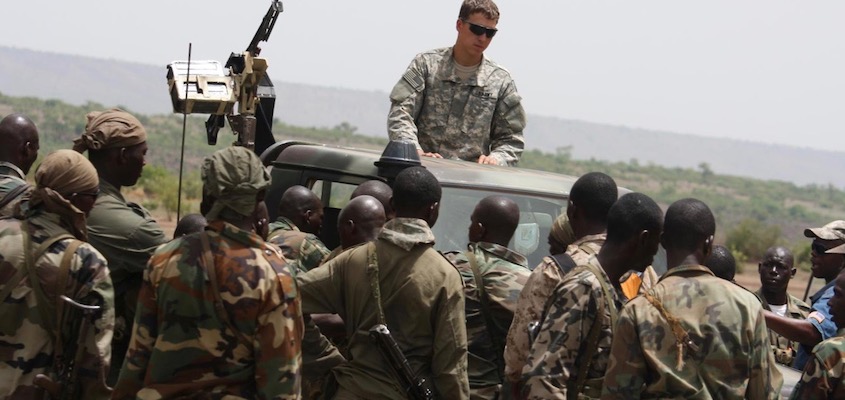
The U.S. military state overthrows democratically-elected governments that it deems to be a threat to corporate interests.
“There is plenty of evidence that the United States is the most depraved and dangerous “meddler” in the affairs of other nations that history has ever known.”
Dan Kovalik is a labor and human rights lawyer, but most of all he is an anti-imperialist and an author of three books. Kovalik’s first two books tackled the specific US war drives against Russia and Iran. His third installment, The Plot to Control the World: How the US Spent Billions to Change the Outcome of Elections Around the World, addresses the broad scope of US election meddling abroad. The book provides much needed political and ideological life support to an anti-war movement in the U.S that has been rendered nearly invisible to the naked eye.
The Plot to Control the World is as detailed in its critique of U.S. imperialism as it is concise. In just over 160 pages, Kovalik manages to analyze the various ways that the U.S. political and military apparatus interferes in the affairs of nations abroad to achieve global hegemony. He wastes no time in exposing the devastating lie that is American exceptionalism, beginning appropriately with the U.S. imperialist occupations of Haiti and the Philippines at the end of the 19thcentury and beginning of the 20th. The U.S. would murder millions of Filipinos and send both nations into a spiral of violence, instability, and poverty that continues to this day. As Kovalik explains regarding Haiti, “While the specific, claimed justifications for [U.S.] intervention changed over time- e.g., opposing the end of slavery, enforcing the Monroe Doctrine, fighting Communism, fighting drugs, restoring law and order -- the fact is that the interventions never stopped and the results for the Haitian people have been invariably disastrous.”
“Kovalik wastes no time in exposing the devastating lie that is American exceptionalism.”
US expansionism has relied upon the ideology of American exceptionalism to silence criticism and weaken anti-war forces in the United States. American exceptionalism claims that the U.S. is a force for good in the world and completely justified in its wars of conquest draped in the cover of spreading “democracy and freedom” around the world. Kovalik challenges American exceptionalism by showing readers just how much damage that US expansionism and militarism has caused for nations and peoples in every region of the planet. Russia, Honduras, Guatemala, the Democratic Republic of the Congo, Vietnam and many other nations have seen their societies devastated by U.S. “election meddling.” In Honduras, for example, a U.S.-backed coup of left-wing President Manuel Zelaya in 2009 made the nation one of the most dangerous places in the world to be a journalist, indigenous person, or trade-union/environmental activist. Thousands of Hondurans have been displaced, disappeared, or assassinated since the coup.
Another important aspect of
The Plot to Control the World is its exposure of U.S hypocrisy surrounding the subject of “election meddling.” Since the end of the 2016 Presidential elections, the U.S. military, political, and media branches of the imperialist state have accused Russia of virtually implanting Donald Trump into the Oval Office. The U.S. public has been fed a steady dose of anti-Russia talking points in an apparent effort on the part of the elites to beat the drums of war with the nuclear-armed state. No evidence has been presented to prove the conspiracy, as a recent
National Public Radio (NPR) analysis states plainly. However, there is plenty of evidence that the United States is the most depraved and dangerous “meddler” in the affairs of other nations that history has ever known.
“The author shows readers just how much damage that US expansionism and militarism has caused for nations and peoples in every region of the planet.”
Just ask the much-vaunted Russians. Kovalik devotes an entire chapter to the 1996 Presidential election in Russia that re-elected the wildly unpopular Boris Yeltsin. The fall of the Soviet Union in 1991 began an era of “shock therapy” in the newly erected Russian Federation, a euphemism for the wholesale theft and transfer of socialized wealth into the hands of oligarchs and multinational corporations. Millions would perish in Russia from an early death due to the sudden loss of healthcare, housing, jobs, and other basic services. In 1996, President Bill Clinton ensured that Yeltsin maintained his near-total grip on state power in Russia by providing the Russian President with a team of U.S. political consultants and over a billion dollars’ worth of IMF monies directly to the campaign. U.S. political and monetary support allowed Yeltsin to rig the election in his favor despite his dwindling popularity. Kovalik shows that if anyone should worry about election meddling, it should be the people of Russia and not the US elites that control Washington.
The Plot to Control the World takes readers into the Democratic Republic of Congo, where the CIA’s coup of revolutionary Patrice Lumumba continues to haunt the resource-rich nation in the form of endless US-backed genocide. It travels to Guatemala, where the CIA overthrow of Jacobo Arbenz led to a U.S.-backed slaughter of a quarter million Guatemalans under the auspices of several military dictatorships. Kovalik shows us that the election of the fascistic Jair Bolsonaro in Brazil was no aberration, as the U.S. was primarily responsible for the rise in fascism in Brazilthrough its direct role in placing the nation under the control of a military dictatorship in 1964. The military dictatorship predated the CIA’s ouster of Chile’s Salvador Allende in 1973, which handed the once socialist state to Augusto Pinochet’s murderous and repressive leadership.
“The mission is always the same: to destabilize independent nations that refuses to bow down to the dictates of U.S. imperialism.”
The entire skeleton of the U.S. military state is on full display in The Plot to Control the World. The U.S. military state utilizes an array of tools to overthrow democratically-elected governments that it deems to be a threat to corporate interests. These tools include the U.S. intelligence agencies, so-called Non-governmental Organizations (NGOs) such as the National Endowment for Democracy, and the various branches of the military itself, to name a few. Regardless of the tools employed, the mission is always the same: to destabilize independent nations that refuse to bow down to the dictates of U.S. imperialism. Thus, while Nicaragua, the Democratic Republic of Congo, and Vietnam may possess unique histories, their economic and political development has been shaped by the destructive interference of the United States.
Dan Kovalik is not likely to be reviewed in the New York Times or other corporate outlets. That’s because Kovalik unapologetically speaks out against U.S. empire and all that upholds it. In doing so, Kovalik’s
The Plot to Control the World walks in the footsteps of anti-imperialists such as Michael Parenti and William Blum. Blum, a former State Department employee, spent his post-State Department life providing humanity with knowledge about how US imperialism operates on the global stage. The New York Times wasted no time in
slandering Blum in their obituary . This showed the great lengths that the ruling elites will go to discredit, defame, and condemn critics of the military industrial complex and how important it is for those who oppose war let go of any expectation that the corporate media will cover Kovalik’s work or anyone else who speaks out against war.
“White supremacy is the biggest lie of all and is completely embedded in the ideology of American exceptionalism.”
With that said, one of the reasons that the left in the U.S. is so weak is because it has been numerically and politically isolated by the lies of the Empire. White supremacy is the biggest lie of all and is completely embedded in the ideology of American exceptionalism. Despite the ruthlessness of the austerity and incarceration regimes, many Americans continue to be convinced that the U.S. is the most exceptional nation in the world and do not balk when its military wages wars abroad at the expense of U.S. tax dollars and civilian lives. U.S. imperialism has made sure that Americans feel that they are special colonizers who see the victims of the U.S. military state as savages worthy of slaughter. The Plot to Control the World is based on a different premise: internationalism. The book links the struggle against US imperialism to the needs of the oppressed and working class living in the heart of an empire, making it an essential read for those who are sick and tired of the prevailing narrative of American exceptionalism and want to be armed with the knowledge that is essential toward changing it.
Danny Haiphong is an activist and journalist in the New York City area. He and Roberto Sirvent are co-authors of the forthcoming book entitled American Exceptionalism and American Innocence: A People’s History of Fake News- From the Revolutionary War to the War on Terror (Skyhorse Publishing). He can be reached at wakeupriseup1990@gmail.com
Danny Haiphong is an activist and journalist in the New York City area. He and Roberto Sirvent are co-authors of the forthcoming book entitled American Exceptionalism and American Innocence: A People’s History of Fake News- From the Revolutionary War to the War on Terror (Skyhorse Publishing). He can be reached at wakeupriseup1990@gmail.com